
ACD vacuum cleaners vs ATEX vacuum cleaners: what is the difference and which one should you choose?
When searching for an industrial vacuum cleaner for sucking up combustible substances or for use in potentially explosive environments, you will quickly encounter two important terms: ACD vacuum cleaners and ATEX vacuum cleaners. Although both types have been developed with safety in mind, they differ greatly in terms of application, standards, and protection. Below, we explain exactly what these differences are.

What is an ACD vacuum cleaner? ✅
ACD stands for Appliances for Combustible Dust. This classification was introduced with the international standard IEC 60335-2-69, which has been in force since 2021.
An ACD vacuum cleaner is designed to safely vacuum up potentially explosive dust in environments that are not classified as ATEX zones. You will find these industrial vacuum cleaners in bakeries, mixing plants, the food industry, and the pharmaceutical sector, among others.
Flammable substances such as flour, sugar, grain, or lactose can cause a dust explosion if handled incorrectly. To prevent this, ACD vacuum cleaners are equipped with spark-free motors, antistatic filters, and thermal protection, among other features.
⚠️ Important: an ACD vacuum cleaner is not permitted in official ATEX zones, but it does offer an extra level of safety in environments where explosive substances are present.
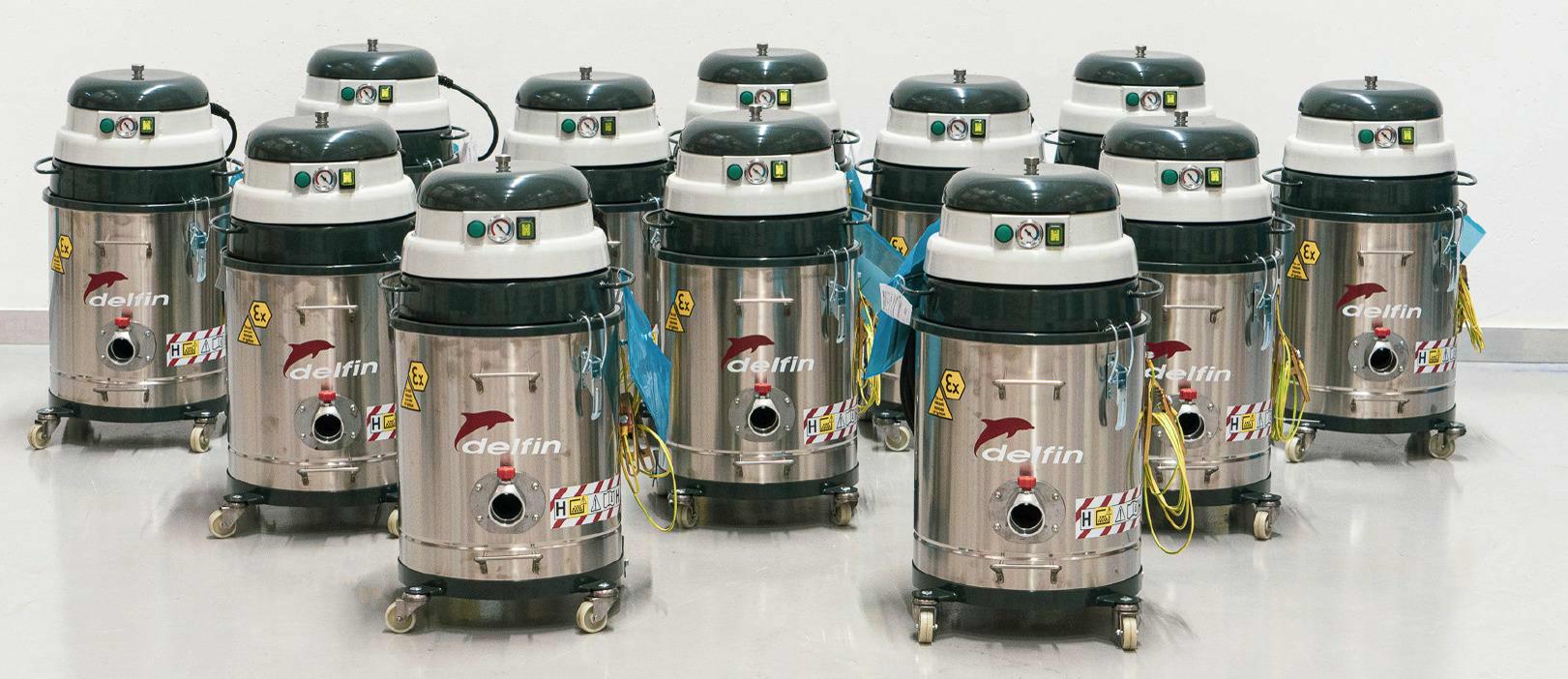
What is an ATEX vacuum cleaner? 🔥
An ATEX vacuum cleaner is specially designed for use in areas where there is a real risk of explosion. These vacuum cleaners comply with the European ATEX Directive 2014/34/EU, which sets strict requirements for equipment in explosive atmospheres.
ATEX vacuum cleaners are suitable for use in the following classified ATEX zones:
-
Zone 0/1/2: risk of explosive gases or vapors
-
Zone 20/21/22: risk of explosive dust mixtures
They feature explosion-proof components, conductive and antistatic materials, and reliable grounding. That is why they are widely used in the chemical industry, petrochemical industry, metalworking, and silo storage.
🔍 The most important differences at a glance
| Feature | ACD vacuum cleaner
|
ATEX vacuum cleaner | |
|---|---|---|---|
| Standard | IEC 60335-2-69 (ACD classification)
|
ATEX 2014/34/EU | |
| Purpose | Safe extraction of explosive dust
|
|
|
| Area of application | Non-ATEX environments
|
Official ATEX zones (0/1/2/20/21/22) | |
| Applications
|
Bakeries, grain silos, pharmaceuticals
|
Chemicals, petrochemicals, metal industry
|
|
| Explosion-proof certified | No | Yes | |
| Filter class | Often H class (HEPA)
|
|
🧠 Which vacuum cleaner do you need?
The right choice depends entirely on your working environment:
-
Do you work with explosive dust in a non-classified zone? Then an ACD vacuum cleaner is usually sufficient. This allows you to work safely without having to comply with the more stringent (and more expensive) ATEX requirements.
-
Are you in an official ATEX zone with a specific explosion risk? Then you are legally required to use an ATEX vacuum cleaner.


